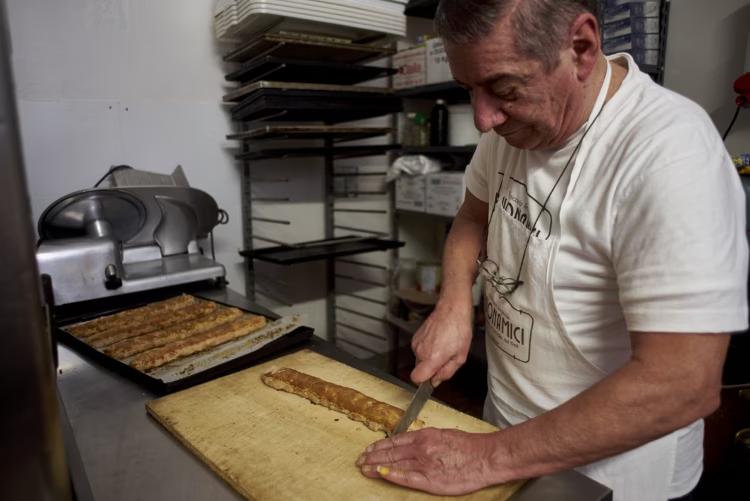
Send a serious cook to Sant’Ambrogio for a morning and you can predict almost exactly what they’ll come back with. A paper wrapped wedge of pecorino. A bag of dried borlotti beans. Three or four artichokes still on the stem. A phone full of photos of an elderly man slicing prosciutto. And the sentence: I didn’t know markets like this still existed.
This is the gap. There are two food markets in central Florence. One of them is on every itinerary, in every guidebook, on every reel. The other one is where Florentines actually shop. They are not the same market. They are not even trying to be the same market.
What happened to Mercato Centrale
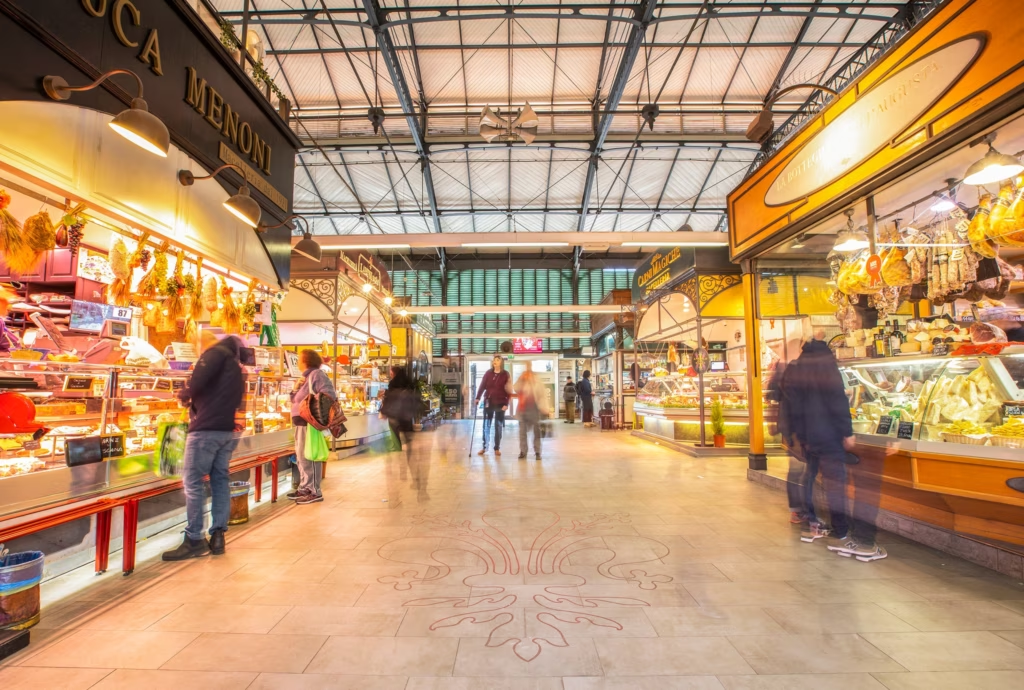
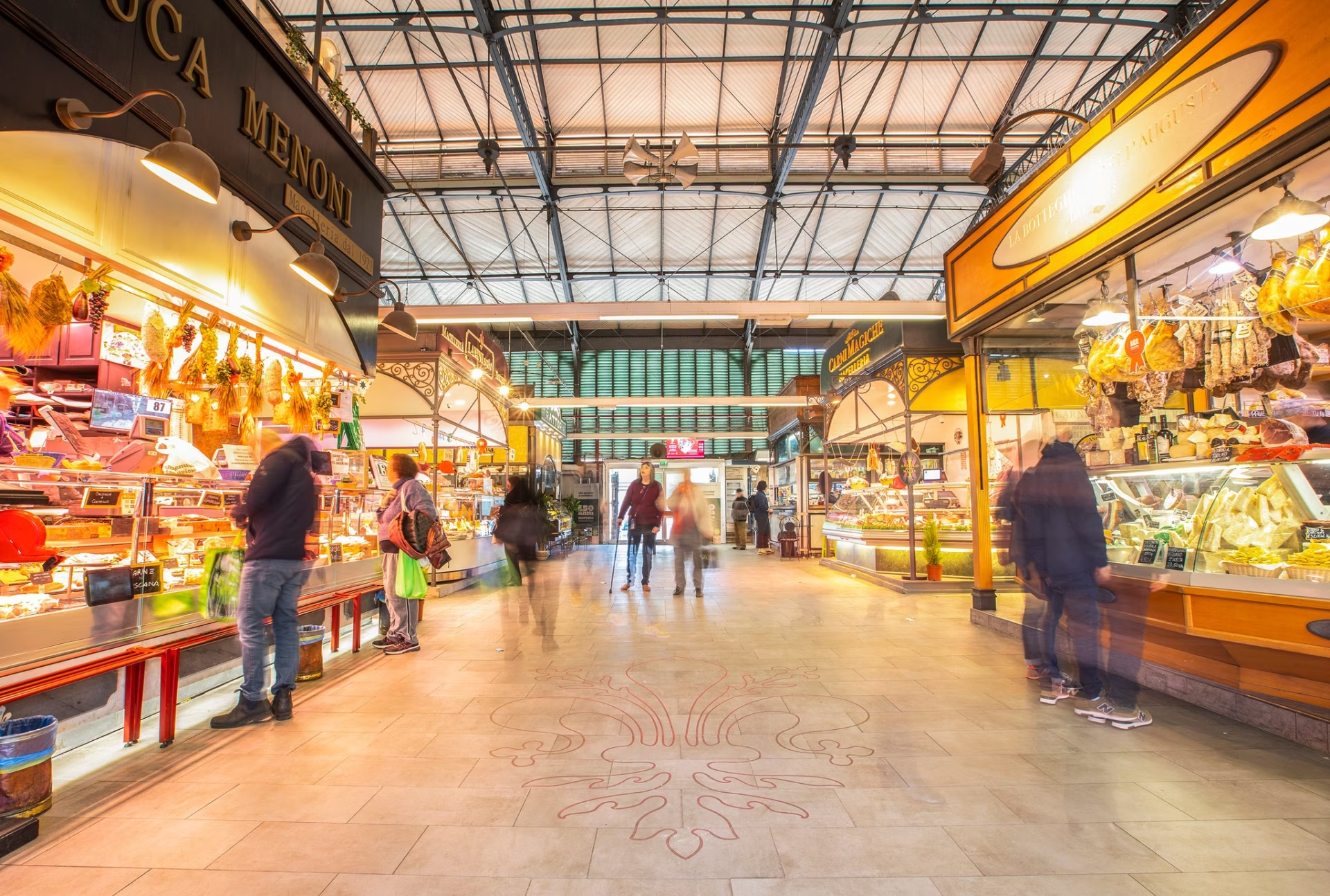
Mercato Centrale is the bigger, better known of the two. A beautiful 19th century iron and glass building near the San Lorenzo leather stalls. The ground floor is a real food market: butchers, fishmongers, pasta makers, a couple of decent produce stands. If you walked in on a Tuesday morning at 9am you’d think you’d found Florence’s culinary heart.
Then in 2014 they opened the second floor.
The upstairs at Mercato Centrale is a food court. A nicely designed, well curated, expensive food court, but a food court. It’s open until midnight, the lighting is Instagram tuned, and most of the people eating there are tourists doing a “food market” experience between the Duomo and the Uffizi. The downstairs has gradually been adjusted around the upstairs. Some of the original vendors are still there. Some have left. The customer base on the ground floor is now half locals, half visitors who’ve been told this is what a Florentine market looks like.
It’s not a bad place. It’s just not the market a serious cook would walk twenty minutes to reach.
Sant’Ambrogio is what locals were trying to keep
Sant’Ambrogio is fifteen minutes east on foot, in a quieter neighbourhood the tourist crowds don’t really reach. From the outside it looks like nothing: a low brick building, a square, a few outdoor stalls in front. The interior is a single open hall, about a third the size of Mercato Centrale, with maybe forty stallholders. There is no second floor. There are no English signs. There is no curated food court. The lighting is whatever the day is doing through the high windows. Nobody is trying to charm you.
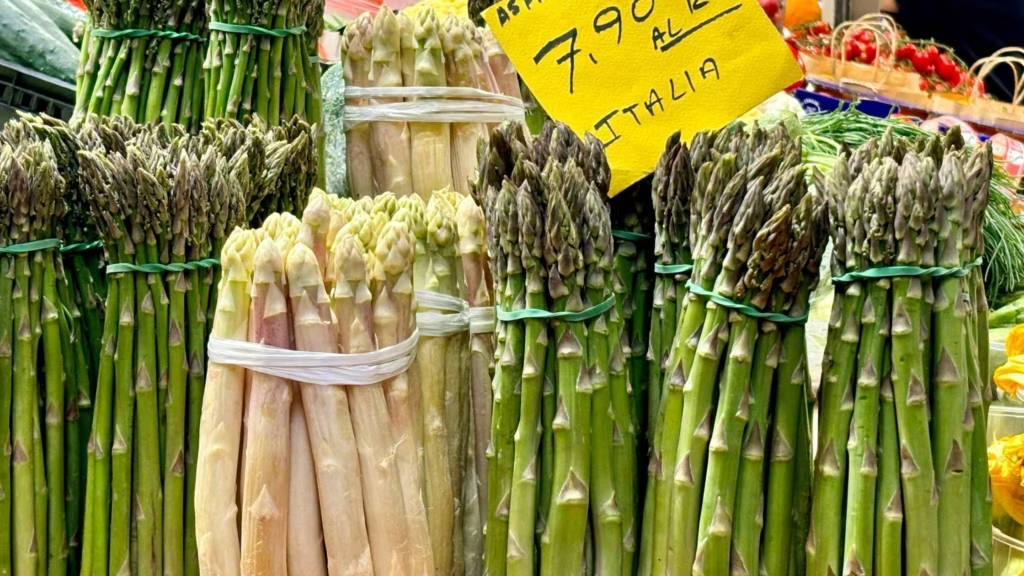
What there is, instead, is the produce. Real produce. Tomatoes that smell like tomatoes when you pick them up. Artichokes still on their stems with the leaves attached, because Florentines want to see the leaves to judge how fresh they are. Cardoons in season. Borage. Wild greens nobody has translated for you. The kind of Florentine cheese counter where the woman behind it slices a sliver off a wheel of pecorino, hands it to you, asks you what you’re cooking, and tells you which one is the right one. The kind of butcher who’ll bone a rabbit for you while you wait, because that’s the actual job.
This is where the Florence pasta class instructors shop. This is where the trattorie in the Oltrarno send a kid with a list at 7am. This is where the families who live in Sant’Ambrogio and Santa Croce buy their week’s vegetables on a Saturday morning. They have been doing this for generations and the market has held its ground because the people running the stalls aren’t trying to do anything except be good at the one thing they do.
What to buy, what to do, how to spend the morning
Even if you’re not cooking on this trip, Sant’Ambrogio is the most useful three hours you’ll spend in Florence as a Curious Cook. A few things worth doing.
Walk the produce stalls first. Don’t buy anything yet. Just look. Notice what’s in season, what the locals are pointing at, what the displays are leading with. In April it’s artichokes and the first fava beans. In autumn, porcini and the start of the truffle. In winter, cavolo nero (the black kale that goes into ribollita) and citrus from Sicily. The market changes its produce every six weeks.
Do the cheese counter properly. Ask for pecorino di Pienza stagionato if you want the grown up version, pecorino fresco if you want the soft, milky one. Both are local. Ask for a slice; they’ll let you taste. Pick up a wedge of stracchino for breakfast. Ask what’s new this week. There’ll be one cheese the woman is excited about.
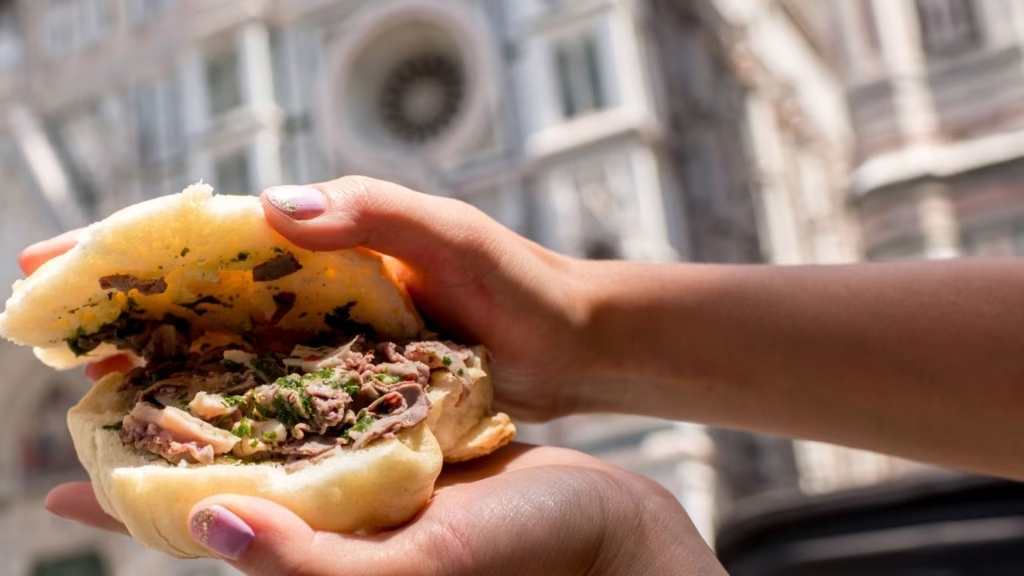
Visit the butcher who’s making finocchiona (the fennel seeded salami) on site. Buy a small piece. Ask for it sliced thin.
Then, and this is the part nobody tells you, go through the back, into the food hall, and have lunch at Trattoria da Rocco.
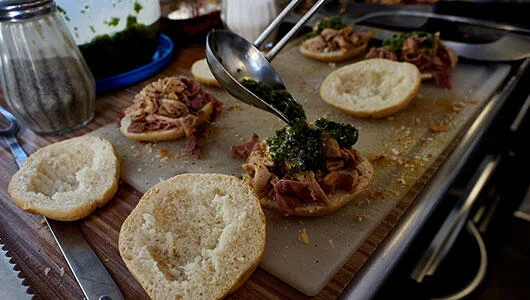
Da Rocco is a 30 cover trattoria physically inside Sant’Ambrogio market. It’s open for lunch only. It serves a daily changing handwritten menu of whatever the market has that morning: ribollita, peposo, pasta with the slow cooked ragù that’s been on the stove since 8am, vegetables sautéed in olive oil from the bottle the family brought in from the country. It costs almost nothing. The man at the next table will be the butcher you just bought salami from, on his break. This is the lunch you came to Florence for. (We have a longer piece on da Rocco for the curious.)
Why this matters if you came to cook
If you’ve signed up for a Florence cooking class, the morning at Sant’Ambrogio is the part of your trip that explains everything you’ll do that afternoon.
You’ll understand, walking through the produce stalls, why a Tuscan tomato sauce has three ingredients and tastes like it has thirty. You’ll understand why every Tuscan recipe begins with prendi le verdure migliori che trovi al mercato (start with the best vegetables you can find at the market) and why that instruction is doing more work than any technique you’ll learn that day. You’ll understand why the cooking class instructors who actually live in Florence don’t take their groups to the supermarket. The ingredient is the recipe, in this kind of cooking. Sant’Ambrogio is the place that proves it.
Most cooking classes that include a market visit will take you to Mercato Centrale because it’s bigger, more central, and easier to manage with a group. The classes worth doing take you to Sant’Ambrogio. It’s a tell. Ask before you book.
How we find these places
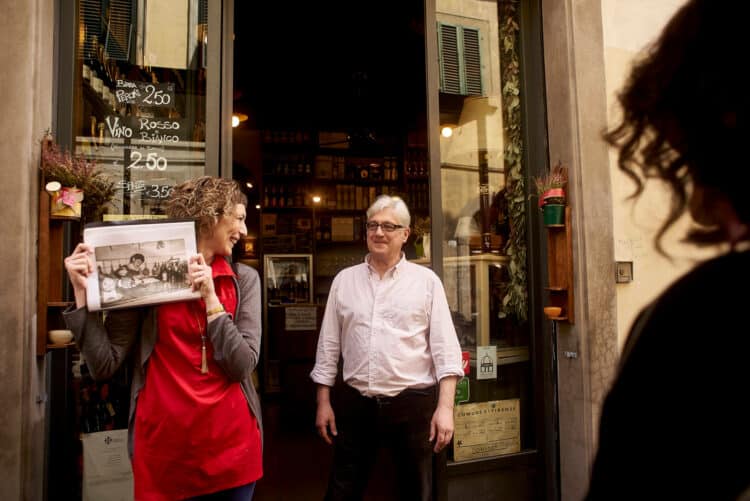
Every Florence experience we run comes through the same process. Our local team of guides who actually live and eat in this city bring tips back from neighbours, regulars, suppliers, the friend of a friend who happens to know the family running an osteria nobody writes about. From there it’s a lot of mornings at the market and a lot of dinners. We test a place repeatedly, on quiet weekday visits and packed Saturdays, before we’d ever bring a guest. Many of the families and stallholders we work with have been part of our tours for more than a decade. We’ve walked every Florence route, often enough to know which stalls are at their best on which days. The relationships are the part that takes years and the part we can’t fake.
Frequently asked questions
Should I visit Mercato Centrale or Sant’Ambrogio?
Both, if you have time. They’re different experiences. Mercato Centrale is fine for a quick lunch in the upstairs food court and a look at the ground floor stalls. Sant’Ambrogio is the working market the locals shop at, the one worth a real morning. If you only have time for one and you care about food, choose Sant’Ambrogio.
What time should I go to Sant’Ambrogio market?
Between 8 and 10am for the full experience, when the produce is fresh and the stallholders aren’t yet rushed. It closes at 2pm. Avoid Sundays (closed) and Mondays (some stalls closed or quieter).
Can I eat at Sant’Ambrogio market?
Yes. Trattoria da Rocco, inside the market itself, serves a lunch only menu of seasonal Florentine cooking. It’s one of the best value real meals in central Florence. There are also coffee bars on the perimeter for an espresso between stalls.
Is Sant’Ambrogio market touristy?
No. There are usually a handful of food savvy visitors and locals on a cooking trip, but the customer base is overwhelmingly Florentines who live in the surrounding neighbourhoods. No English signage, no hawkers, no curated food court. Just a working market.
Do I need to speak Italian to shop at Sant’Ambrogio?
Pointing and smiling will get you most of the way. The cheese and salumi counters are happy to let you taste before you buy, and un assaggio? (a taste?) is the magic word. If you’re cooking with what you buy, joining a market and cooking experience with a local guide is the easiest way to make the morning useful.
Sources
Da Rocco Trattoria. (n.d.). Da Rocco Trattoria. https://www.daroccotrattoria.com/
Eating Europe. (2026, February 12). A culinary guide to food markets in Florence. https://minceur-vital.today/blog/food-markets-in-florence/%3C/span%3E%3C/a%3E%3C/p%3E
Eating Europe. (n.d.). Florence cooking class. https://minceur-vital.today/florence/florence-cooking-class/%3C/span%3E%3C/a%3E%3C/p%3E
Eating Europe. (n.d.). Cooking classes in Florence. https://minceur-vital.today/blog/cooking-classes-florence/%3C/span%3E%3C/a%3E%3C/p%3E
Mercato Centrale Firenze. (n.d.). Mercato Centrale Florence. https://www.mercatocentrale.com/florence/
Mercato Sant’Ambrogio. (n.d.). The oldest market in Florence. https://mercatosantambrogio.it/?lang=en

Florence Sunset® Food & Wine Tour
An unforgettable evening filled with wines, fresh pasta, cocktails and an exclusive wine cellar experience.
- Daily
- 3.5 Hours
- Small Group
Florence Food & Local Flavors Tour
An intimate culinary experience through Oltrarno, among Tuscan flavors and legendary local hosts
- Mon-Sat
- 3 Hours
- Small Group
Tuscany Truffle Hunt: A Culinary Adventure
A gourmet culinary adventure with a multi-course meal in the Tuscan countryside.
- 5 Hours
- Small Group