The most reliable lunch in Florence costs five euros, comes wrapped in paper, and has a backstory most travel writing posits as a dare. Lampredotto is the Florentine street food the internet has decided you need to be brave to eat. The truth, when you actually take a bite, is that it’s the softest, most savoury, most ordinary tasting sandwich you’ll have all week. The bravery is a marketing problem. The dish itself is just a standard Florence lunch.
The first time most visitors try one, they finish the first sandwich and order a second before the queue has moved.
What it is, and why it doesn’t matter
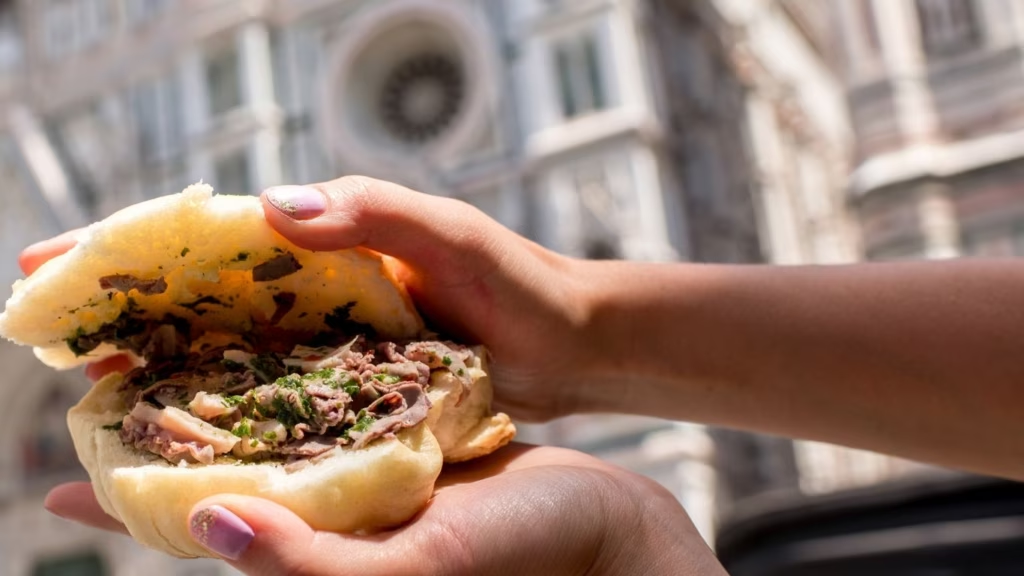
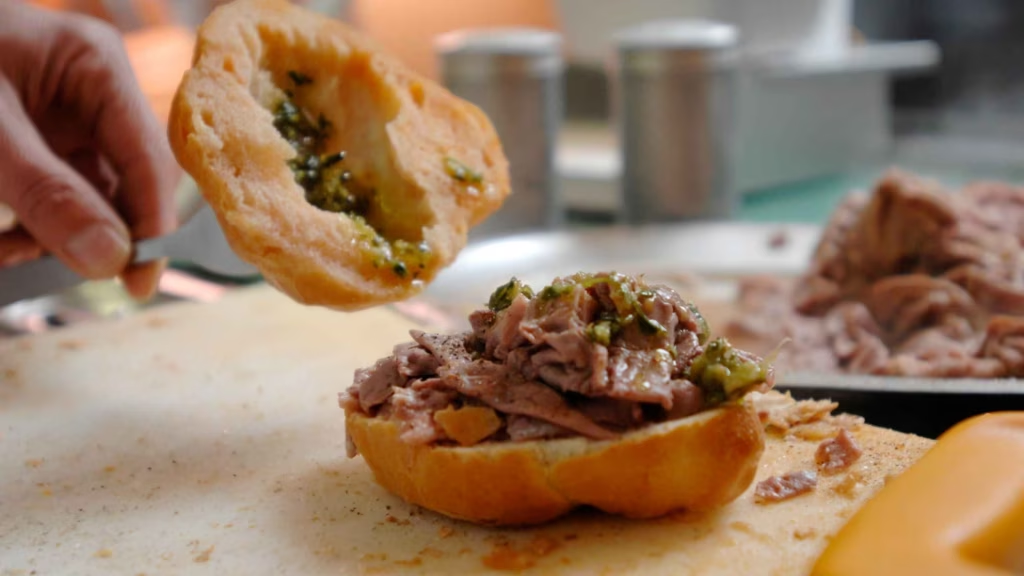
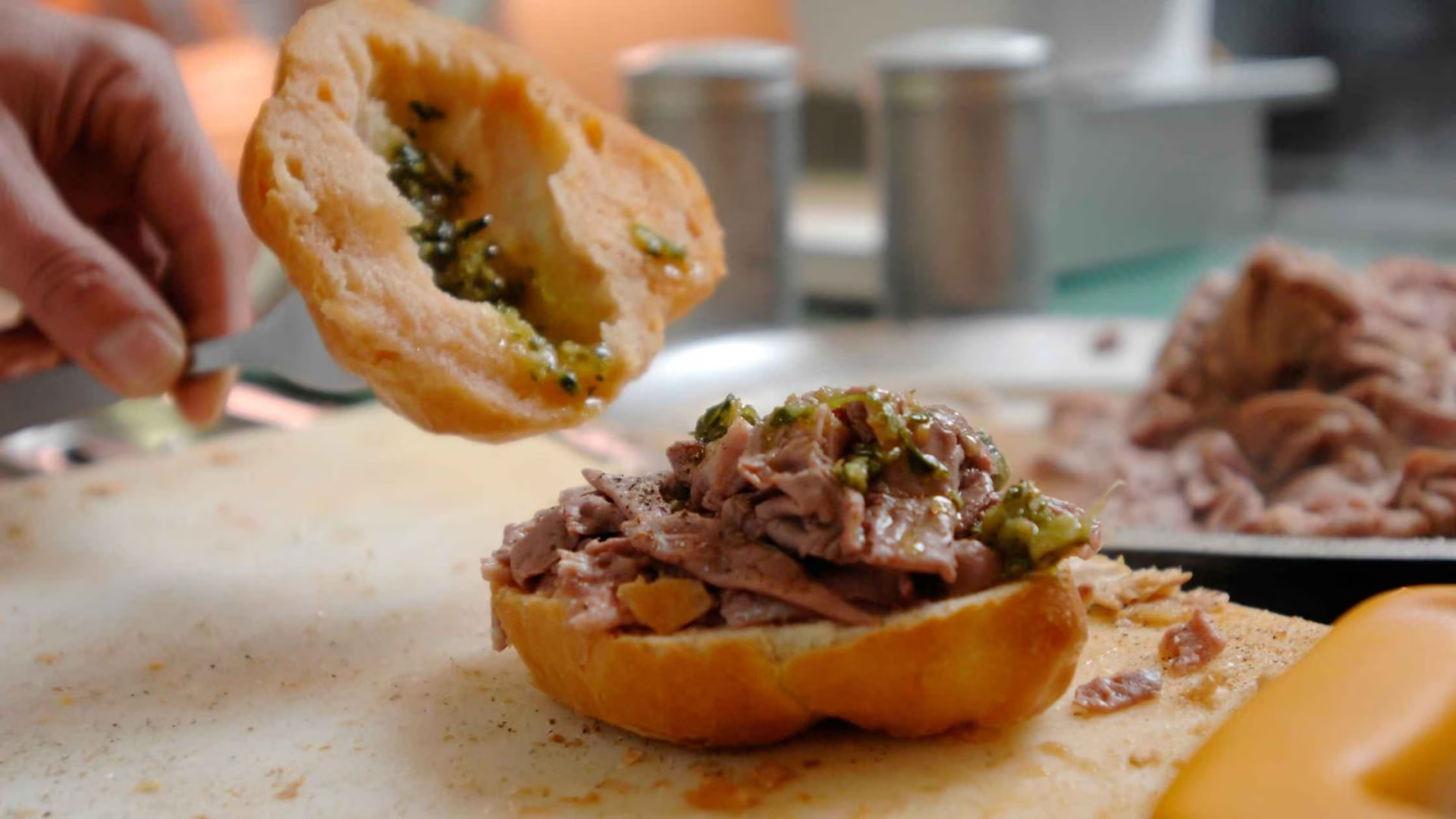
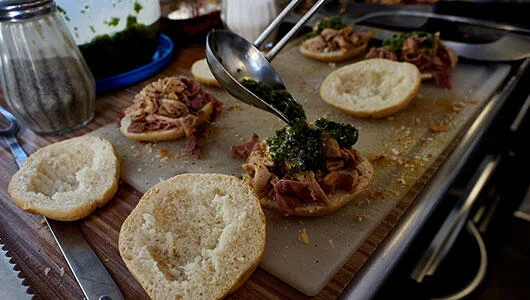
Lampredotto is the abomasum, the fourth and final stomach of a cow. It’s slow cooked for hours in a broth made with tomato, onion, parsley, and celery until it’s falling apart tender, then sliced thin, piled into a crusty Tuscan roll, and topped with two sauces. That’s it. That’s the whole dish.
What it actually tastes like is mild, slightly mineral, and unbelievably soft, somewhere between brisket and very tender pot roast. There’s no funk. There’s no aggressive offal flavour. The hours in the broth do the work. If you ate it without anyone telling you what it was, you’d probably guess it was some sort of slow braised beef.
So why does it sound so much worse than it tastes? Two reasons. One: most people who write about lampredotto online lead with cow’s stomach because that’s the click worthy framing. Two: English language travel writing carries a residual squeamishness about offal that Italian food writing simply doesn’t have. In Florence, this is what working people have eaten for lunch for six hundred years. Nobody is being brave.
Why Florence eats this and Rome doesn’t
Lampredotto exists because medieval Florence was a city of butchers and tanners and the wealthy bought the muscle cuts. The offal, the stomachs, the intestines, the cheek, the tail, went to the working districts on the other side of the river. Tripe sellers (trippai) set up carts at the edges of Florence’s markets and slow cooked what nobody else wanted to buy.
Six hundred years later, the carts are still there. The recipe hasn’t really changed. The clientele is now half builders on a 30 minute lunch break and half people who’ve been told by a friend they have to try this. Most of the carts stand on the same corners they’ve stood on for decades.
This is the dish that separates the Florentines from everyone else in Italy. Romans have their own offal traditions (coda alla vaccinara, pajata), but lampredotto is specifically Florentine. You can’t really get it anywhere else, and Florentines treat it the way Neapolitans treat pizza: as a daily fact of life, not a specialty.
How to order it
You walk up to the cart. You queue. When it’s your turn, you say un panino di lampredotto, per favore. Then the trippaio will ask you a series of questions in rapid Italian. Here’s how to handle each one.
“Bagnato?” (Wet?) They’re asking if you want the top half of the bread dipped in the cooking broth before they close the sandwich. The answer is yes. The juice soaks into the bread, the bread holds together long enough to eat, and the whole thing turns into the right thing. Saying no is a beginner’s mistake.
“Salsa verde?” (Green sauce?) Yes. Salsa verde is parsley, garlic, capers, anchovies, and olive oil blended into a bright sharp sauce. It cuts the richness. Every Florentine lampredotto sandwich has it.
“Piccante?” (Spicy?) A homemade chilli oil. Say yes if you like heat. Say no and you’re missing the point but you’re not wrong.
That’s the order, although you can get some help from your guide if you’re on a culinary exploration of Florence. The whole thing costs four to six euros depending on the cart. You eat it standing up, leaning slightly forward so the broth doesn’t get on your shirt.
Where to eat it
There are maybe a dozen lampredotto carts and counters in central Florence, and four of them have been getting it consistently right for years. The most central is Trippaio del Porcellino, on Via della Porcellana near the bronze boar statue (Il Porcellino) that gives it its name. Busy, fast moving lunchtime queue, generally excellent.
A short walk east, inside Sant’Ambrogio market, is Sergio Pollini Lampredotto, the counter where the people who actually shop at Sant’Ambrogio have their lunch. Quieter than the central carts, and some of the best broth in the city.
Da Nerbone, inside Mercato Centrale on the ground floor, is the grand old name in Florentine boiled meat sandwiches. Worth ordering both the lampredotto and the bollito (boiled beef), since they’re famous for the second one too. There’s almost always a queue at lunchtime, and it’s worth it. And if you’re staying near Santa Croce, the second Pollini location on Via dei Macci is family run, less crowded than Porcellino, and just as good.
What to drink with it, and what to do next
Lampredotto is a stand up sandwich. There’s no proper sit down ritual. The traditional pairing is a small plastic cup of red wine, un bicchiere di rosso, that costs a euro and a half and arrives with no ceremony. Most carts have a barrel of house red they sell from. It’s not great wine. It’s not supposed to be. The point is the pairing of broth soaked bread, cold sharp wine, and the conversation around the cart.
If you’ve enjoyed your lampredotto and want to keep going, follow it up with a schiacciata (Tuscan flatbread sandwich) at All’Antico Vinaio for a different kind of street food, or walk five minutes to a coffee bar for an espresso. Don’t sit down for two hours after. Florentine street food is built around the rhythm of moving on.
Why this matters for a food tour
The thing about lampredotto is that almost nobody finds it on their first day in Florence on their own. Either they don’t know what they’re looking for, or they walk past three carts assuming it’s something they couldn’t possibly want to eat. By the time they figure out what it is and where to find it, they’ve already had three meals at restaurants with laminated menus.
This is the case for a food tour. The reason food tours exist isn’t that the information is secret. Most of it is in this article. It’s that the experience needs context, ordering know how, an introduction to the trippaio who’s been at this corner for fifteen years, and the social cover of being walked up to a counter with someone who’s already in conversation with the cook. The lampredotto on a food tour is the same lampredotto you’d buy on your own. The difference is that on the tour, you actually buy it.
How we find these places
Every stop on our Florence food tours comes through the same process. Our local team of guides who actually live and eat in this city bring tips back from neighbours, regulars, suppliers, and the trippai themselves. From there it’s a lot of sandwiches. We work through every cart in the city repeatedly, on quiet weekday lunches and packed Saturday queues, before we’d ever bring a guest.
Many of the carts and counters we use have been part of our tours for more than a decade. The same family slicing the bread, the same broth on the same stove. We’ve eaten at every Florence stop, often enough to know what an off day looks like and whether the cook recovers. The relationships are the part that takes years and the part we can’t fake.
Frequently asked questions
What does lampredotto actually taste like?
Mild, slightly mineral, and very tender, somewhere between brisket and slow braised pot roast. The hours in the broth strip away any strong offal flavour. If you ate it blind, you’d probably guess it was some kind of slow cooked beef.
Is lampredotto safe to eat as a tourist?
Yes. Lampredotto carts are subject to the same Italian food safety standards as any other vendor, and the broth is held at a constant simmer. The meat is fully cooked through every time it’s served. Stick to the carts with steady local lunch trade and you’re on the safest food on the street.
How much does a lampredotto sandwich cost in Florence?
Four to six euros at most central carts. A small glass of red wine to go with it is another euro fifty or so. A full lampredotto lunch in central Florence is around six to eight euros total, one of the best value meals in the city.
Where is the best lampredotto in Florence?
The names that consistently come up are Trippaio del Porcellino in the centre, Sergio Pollini inside Sant’Ambrogio market, and Da Nerbone inside Mercato Centrale. All three are under ten minutes’ walk from each other if you want to comparison shop.
What’s the difference between trippa and lampredotto?
Both are stomach, but from different chambers. Trippa is from the rumen and reticulum (the first two stomachs) and has a honeycombed texture; lampredotto is from the abomasum (the fourth) and is softer and more meat like. Trippa is usually served stewed in tomato; lampredotto is sliced into a sandwich. They’re cousins, not the same dish.
Source
Eating Europe. (2025, January 18). A guide to enjoy the best lunch in Florence. https://minceur-vital.today/blog/lunch-in-florence/%3C/span%3E%3C/a%3E%3C/p%3E
Eating Europe. (2026, February 12). A local’s guide to street food in Florence. https://minceur-vital.today/blog/street-food-in-florence/%3C/span%3E%3C/a%3E%3C/p%3E
Eating Europe. (2026, February 12). A culinary guide to food markets in Florence. https://minceur-vital.today/blog/food-markets-in-florence/%3C/span%3E%3C/a%3E%3C/p%3E
Facebook. (n.d.). Trippaio del Porcellino. https://www.facebook.com/p/Trippaio-del-Porcellino-100063455679983/
Eating Europe. (n.d.). Florence food tours. https://minceur-vital.today/florence/%3C/span%3E%3C/a%3E%3C/p%3E
Eating Europe. (n.d.). Florence Sant’Ambrogio market vs Mercato Centrale. https://minceur-vital.today/blog/florence-santambrogio-market-vs-mercato-centrale/%3C/span%3E%3C/a%3E%3C/p%3E
Facebook. (n.d.). Nerbone. https://www.facebook.com/pages/Nerbone/163884780289093
Facebook. (n.d.). Tripperia Pollini. https://www.facebook.com/tripperiapollini/?locale=it_IT
Facebook. (n.d.). Trippaio del Porcellino. https://www.facebook.com/p/Trippaio-del-Porcellino-100063455679983/

Florence Sunset® Food & Wine Tour
An unforgettable evening filled with wines, fresh pasta, cocktails and an exclusive wine cellar experience.
- Daily
- 3.5 Hours
- Small Group
Florence Food & Local Flavors Tour
An intimate culinary experience through Oltrarno, among Tuscan flavors and legendary local hosts
- Mon-Sat
- 3 Hours
- Small Group
Tuscany Truffle Hunt: A Culinary Adventure
A gourmet culinary adventure with a multi-course meal in the Tuscan countryside.
- 5 Hours
- Small Group